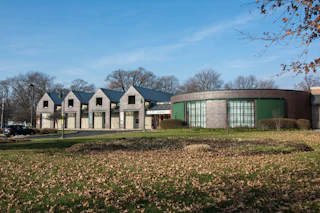
The History Museum & Oliver Mansion
What you see around The Bend today is rooted in its past.
Few attractions bring this to light better than The History Museum, which is on the same campus as the Studebaker National Museum and includes the pristine Oliver Mansion, also known as Copshaholm.
Its exhibits paint a vivid picture of the St. Joseph River Valley Region — from prehistory, to settlement, to the rise of industry with stops along the way. It’s a must-see for any visitor, especially those looking to include a history tour on their itinerary.
Tour the Historic Oliver Mansion, Copshaholm
History doesn’t get much more vibrant than the mansion.
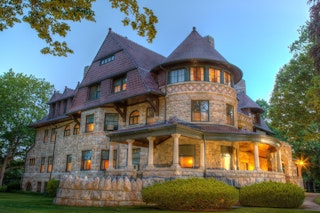
Once owned by the industrialist J.D. Oliver, it was built in 1895-96. A New York architect designed the 38-room home. Tour it and you’ll find what others have seen — it’s in perfect condition. All the furnishings are original, which offers a rare window into how the Oliver family lived decades later.
Some facts about the mansion:
- It was built with Indiana field stone, which was transported to the site and cut.
- It was one of the first homes in South Bend with electricity.
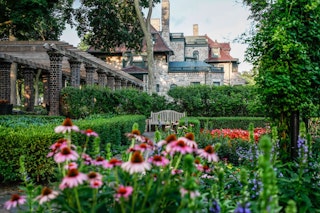
- More than two acres of Italianate gardens surround the mansion.
- The mansion and gardens are listed on the National Record of Historic places and registered as an American Treasure.
- The mansion was donated in tact, meaning with most of the items inside.
The Historic Oliver Gardens
The Historic Oliver Gardens are dutifully maintained to resemble the original gardens cared for and enjoyed by the Oliver family. Constantly blooming and changing throughout the spring and summer seasons, the gardens are a sight to behold and a must visit during your stop.
The History Museum Exhibits
Temporary Exhibits
One stop at The History Museum might not be enough. Several exhibits change, giving visitors a new look every time they make the trip. Here is the current lineup of temporary exhibits.
First Peoples, First Settlers: Indiana’s Interwoven Roots
First Peoples, First Settlers: Indiana’s Interwoven Roots explores the shared history of the St. Joseph River Valley. The region’s first inhabitants were Native Americans, predominantly the Potawatomi. The region would come to be dominated by settlers of European descent, many of whom migrated from the East in search of new opportunities. Visitors will learn about Potawatomi life before European contact, the challenges faced by early settlers as they relocated westward, and the profound changes that followed as their lives became increasingly intertwined. View through January 3, 2027.
MOMENTS THAT MADE US
Every community has moments that shape its identity, and South Bend is no exception. Through the experiences of entrepreneurs, workers, artists, and civic leaders, visitors will discover how local history reflects and contributes to America’s broader story. Developed by History Colorado and a multi-state collaboration for the nation’s 250th anniversary, Moments That Made US allows host communities to connect their own local histories to the American experience. The exhibition explores five themes drawn directly from the Declaration of Independence: Created Equal; Life, Liberty, and the Pursuit of Happiness; Free and Independent States; Consent of the Governed; and We Mutually Pledge. The featured moments remind us that our story was never inevitable, we shaped it at every turn.
Through artifacts, photographs, and first-hand accounts, Moments That Made US invites you to see how local moments and experiences became part of the American story as part of the ongoing America250 celebrations at the Studebaker National Museum and The History Museum. View through January 3, 2027.
City and Campus: Rediscovering Lost Landmarks
This year marks 50 years since the Great Lakes freighter, Edmund Fitzgerald, sank in Lake Superior. The Gordon Lightfoot song that appeared the following year helped educate the public on the dangers of being a Great Lakes sailor. This exhibit will cover several shipwrecks that have occurred on the inland seas. View through July 2026.
Revolution on the Frontier
Did you know The Revolutionary War reached beyond the Appalachian Mountains? Revolution on the Frontier highlights both familiar events and the lesser-known struggles that unfolded on the western frontier, including present-day Indiana. View through January 1, 2027.
Permanent Exhibits
Voyages: The History of the St. Joseph Valley Region
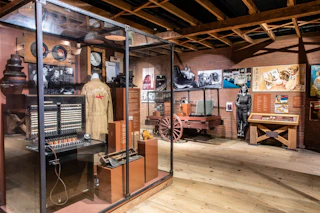
Seven rooms of dioramas and interactive displays explain how the St. Joseph River Valley blossomed from dense forest to the age of French exploration and into a thriving Midwest industrial center. Visitors can "walk" the portage that connected the Great Lakes to the Gulf of Mexico. They can see how early settlers lived in the area. This permanent exhibit tells how the native Potawatomi were forcibly removed from the area in the 1830s.
It also touches on the Grand Kankakee Marsh, which was dredged for farmland. An award-winning, 30-minute video documentary in the Free Life Theatre features stories about the African American community in the region from the 1820s through World War I.
Another area explains industrial growth in the late 1800s, including the rise of Studebaker and the Oliver Chilled Plow Works.
Guide yourself through this area so you can take in each display on your own time.
First in their Field: The Story of the All-American Girls Professional Baseball League
Men abroad during World War II sparked an idea for Philip Wrigley – create the All-American Girls Professional Baseball League. Immortalized in the film A League of Their Own, the league actually operated for 12 years. Teams propped in cities across the Midwest. South Bend jumped into the game with the South Bend Blue Sox. It was one of the original four teams and stayed in the league for all 12 seasons.
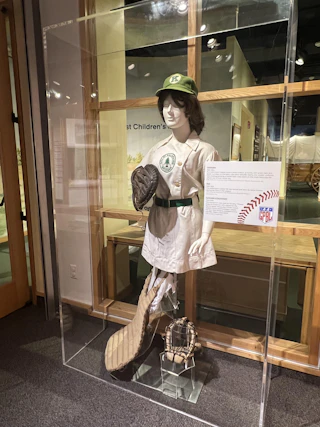
The History Museum’s collection — a repository for the league — includes photographs, programs, film footage, scrapbooks and playing equipment used by teams. It’s a treasure for baseball and The Bend.
Colfax: Speaker for Freedom
Colfax: Speaker for Freedom is an in-depth exhibit on the life and times of Schuyler Colfax. Colfax was born in the region and went on to a storied political career. He rose to prominence as Speaker of the House under president Abraham Lincoln, during which time he guided passage of the 13th Amendment abolishing slavery. He later served as vice president to Ulysses S. Grant.
Unseen Treasures of the Oliver Mansion
Items from the Oliver Mansion that aren’t normally seen on a house tour are on display in this permanent exhibit.
Tour the Navarre Cabin
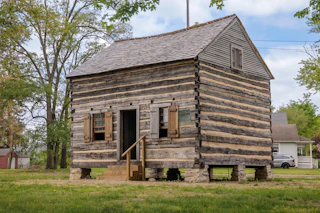
In 2024 the historic Navarre Cabin, the oldest structure in St. Joseph County, was slowly and carefully reloacted from Leeper Park East to The History Museum campus. The Navarre Cabin Homestead site includes cabin tours, educational programming, informative programming to include information about local and European goods typical of the Fur Trade, foodways of pioneer times, how the early settlers tended health needs, and ways the growing community cared for livestock.
Pierre Freischutz Navarre was the first person of European descent to settle in St. Joseph County. Navarre’s arrival played a significant role in the history of St. Joseph County, and his presence paved the way for the founding of the city of South Bend. Navarre married a Potawatomi woman named Keshewaquay, who adopted the name Angelique. Along with their seven children, they lived in the cabin on the north side of the St. Joseph River, near what is now 123 W. North Shore Drive.
The Worker's Home
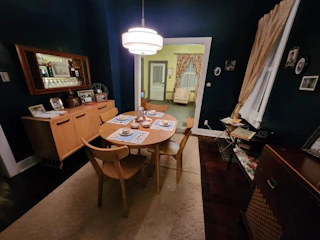
The Worker's Home tells the story of the community's African American history as well as the Great Migration and the Civil Rights Movement through guided tours and special programs. Furniture, furnishings, photographs, and other materials in the home reflect those periods in history. It continues its mission since first opening in 1994 to tell the history of workers and their families, with special attention to the many ethnicities of the St. Joseph River Valley Region.
Kidsfirst Children's Museum
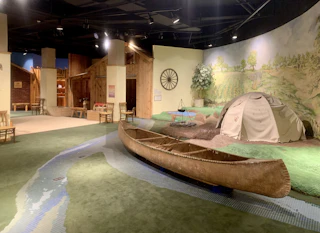
Kidsfirst engages children’s imaginations through hands-on environments and provides fun ways for young ones to discover history. In Kidsfirst, kids will find Pierre Navarre’s Cabin, complete with a child-sized dining table, chair and bed, plus hands-on household items.
Hand-crafted furniture gives an authentic feel to the 1830s one-room schoolhouse, adjacent to Navarre’s Cabin. An 1838 map of South Bend and McGuffey Readers can be explored in the schoolhouse.
Adjacent to the schoolhouse is the trading post of Lathrop Taylor, who was one of the founding fathers of South Bend. Like many of the first residents in South Bend, Lathrop Taylor was a fur trader who built a trading post along the St. Joseph River.
In Peter Coleman’s livery stable and farrier shop, kids can learn about Peter Coleman, the first local African American settler. His trade, among the most essential on the frontier, can be “practiced” using the new brick forge, shoeing horse, and mountable, saddled “pony.”
Kids can also explore Chief Leopold Pokagon’s wigwam and “navigate” the St. Joseph River in a life-sized birch-bark canoe.
*Kidsfirst areas are wheelchair accessible to meet current American Disabilities Act (ADA) standards.
Shop the Museum Boutique
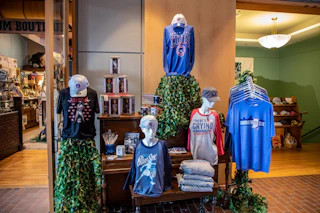
The Museum Boutique offers a unique shopping experience. The perfect treasure is bound to be found here with exclusive merchandise, one-of-a-kind items, officially licensed apparel, and carefully selected antiques. Take a piece of history home with you. You can also shop the online store. *Please note: all purchases must be picked up locally.
Stream "A Bend in Time" Podcast
History buffs or anyone looking to dive deeper into some of the stories and local figures who featured prominently in our past, you'll want to check out “A Bend in Time,” a new podcast of curated histories of the greater South Bend area. Presented by The History Museum and hosted by Aaron Helman, a new series of 8 episodes will be released quarterly starting on October 8, 2024.